
You run the self-clean cycle because you want to get rid of baked-on grease without spending an hour scrubbing the oven. Instead, the cycle finishes and you find a blank display, an oven door that will not unlock, or an oven that powers on but no longer heats. When that happens, the cleaning cycle can feel like it created a bigger problem than the mess it was supposed to remove.
The reason is the amount of heat involved. A high-temperature self-clean cycle can bring the oven cavity to roughly 800°F or higher, far above normal baking temperatures. That extreme heat can place additional stress on thermal fuses, electronic controls, door-lock mechanisms, heating components, and nearby wiring, particularly in an older appliance.
That does not mean every self-clean cycle will damage an oven. It does mean homeowners should understand what can happen when an appliance is exposed to those temperatures. This guide explains the common post-self-clean problems, what the symptoms may indicate, and when it makes sense to have an appliance technician inspect the oven.
Why Does the Self-Clean Cycle Put So Much Stress on an Oven?
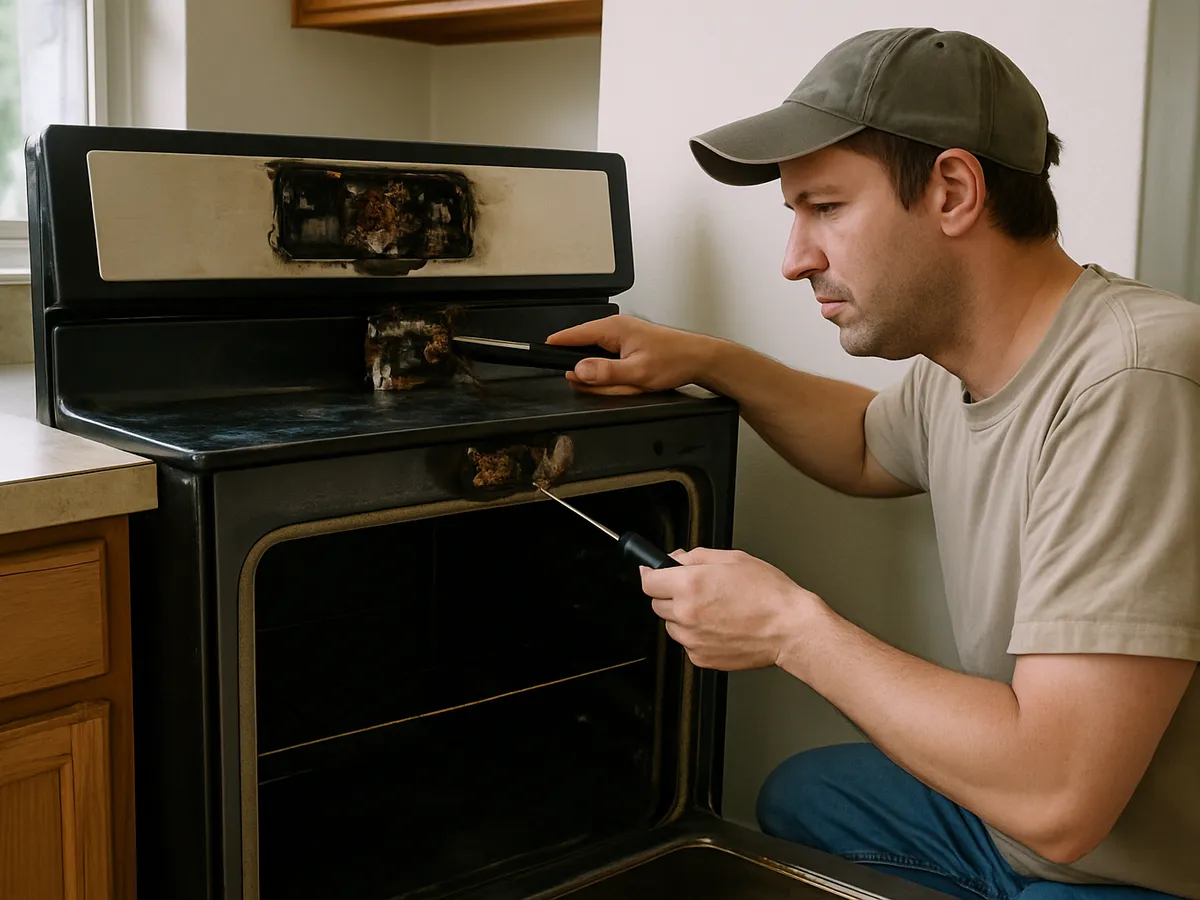
During normal baking, most homeowners use temperatures around 300°F to 500°F. Self-clean is different because the oven intentionally reaches much higher temperatures to break down food residue into ash that can be wiped away afterward.
That heat is concentrated inside the oven cavity, but surrounding components are exposed to elevated temperatures as well. The longer the cycle runs, the more thermal stress the oven’s components experience.
For an older oven, years of heating and cooling cycles may also have already weakened certain components. A self-clean cycle may be the event that exposes an existing weakness rather than being the only reason the component failed.
What Parts Can Be Affected During Self-Clean?
Several oven components can develop problems after a high-temperature cleaning cycle. The exact components and failure points vary by manufacturer and model, so the symptom should be used as a starting point rather than a diagnosis.
A technician can test the affected circuit before replacing anything. That matters because a dead oven after self-clean could involve a fuse, control, power supply, or another component, and the same symptom can have more than one cause.
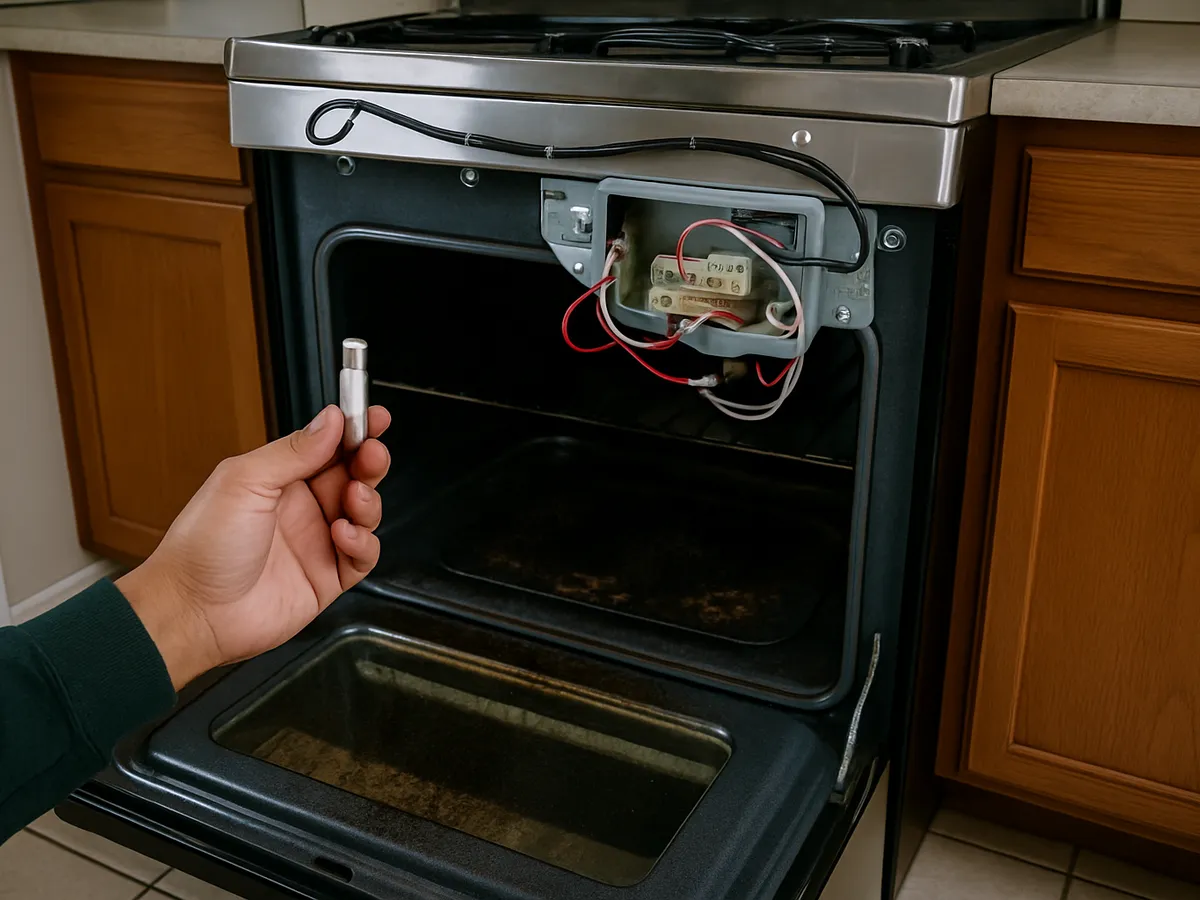
Thermal Fuse
A thermal fuse is a safety component designed to interrupt electrical power when temperatures become excessive. If it opens, the oven may have no display or response at all.
The fuse itself may be straightforward to replace, but the reason it opened still needs to be considered. Simply replacing the fuse without checking the surrounding circuit may leave the underlying problem unresolved.
Control Board
The electronic control board manages functions such as temperature regulation, timing, displays, and communication between components. Because it is located outside the hottest portion of the cavity, it is not exposed to the same temperature as the oven interior, but excessive heat can still affect electronic components and connections.
A control problem may appear as a blank display, error message, buttons that do not respond, or unusual operation after self-clean. Testing is important before assuming the board itself needs replacement.
Door-Lock Assembly
The oven door locks during the self-clean process because of the high temperatures involved. Depending on the model, the locking system may use a motor, switch, latch, or combination of components.
If the oven has cooled but the door remains locked, do not force it open. Forcing the latch can damage the door-lock mechanism or assembly and create a more extensive repair. If the lock remains engaged after the oven has fully cooled, consider scheduling professional appliance repair service to have the mechanism safely diagnosed.
My Oven Won’t Turn On After Self-Clean. What Should I Check?
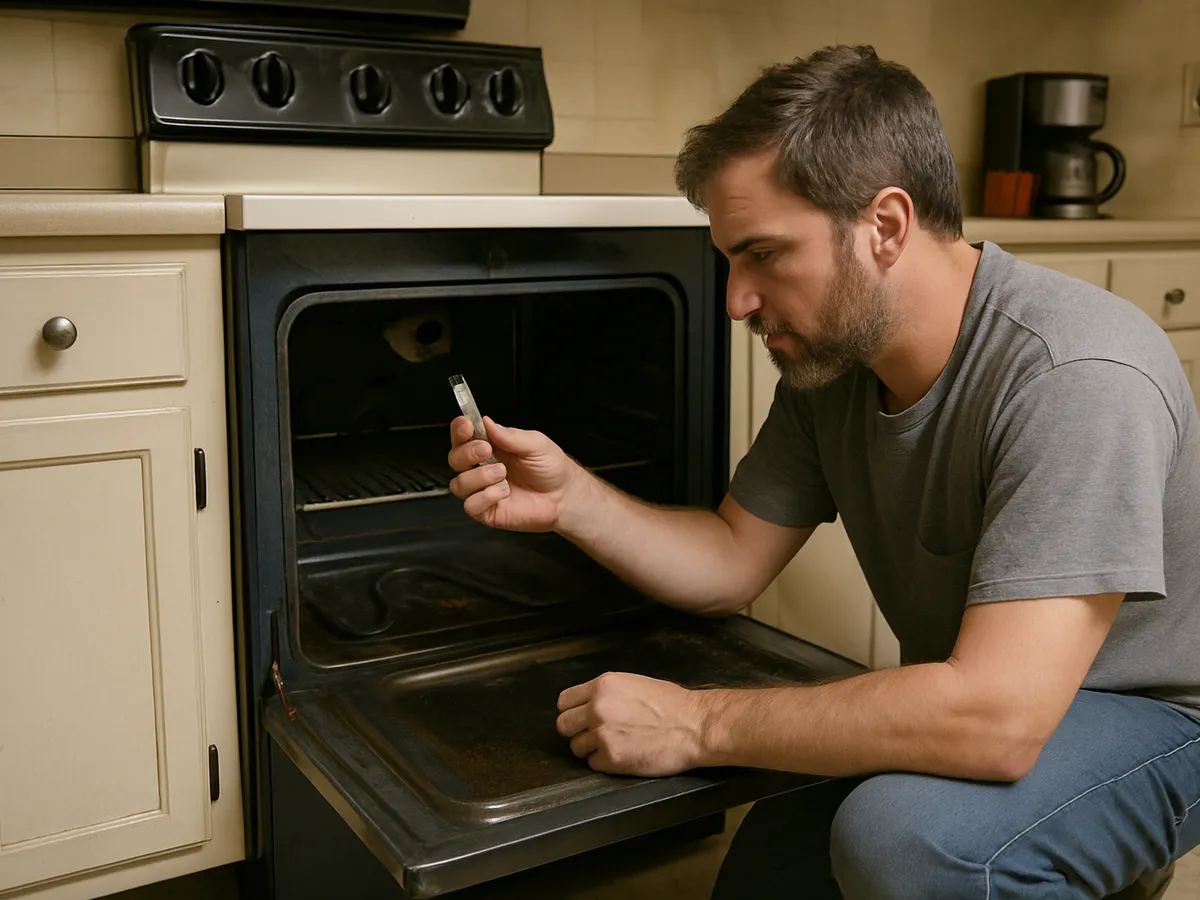
A completely dead oven is one of the most common homeowner concerns after a failed self-clean cycle. Before assuming the appliance needs a major repair, check the simplest possibilities first.
Look for these symptoms:
- No display, lights, or response: A power problem, thermal fuse, or control issue may be involved.
- Display works but oven does not heat: The heating element, wiring, relay, or heating circuit may need testing.
- Door remains locked: The lock assembly or control system may not have released properly.
- An error code appears: The code can provide a useful starting point for diagnosis.
- Breaker trips again: There may be an electrical fault that needs professional attention.
If the oven remains unresponsive after basic checks, professional oven and range repair can help identify the failed component instead of replacing parts based only on the timing of the problem.
What Can You Safely Do After a Self-Clean Failure?
Homeowners can perform a few basic checks, but oven repairs should not involve opening the appliance cabinet or working around live electrical components.
Start With the Breaker
If the oven has no power, check the circuit breaker. A temporary electrical interruption can sometimes make the appliance appear completely dead.
If the breaker has tripped, reset it once. If it immediately trips again, leave it off and arrange for professional service rather than repeatedly resetting it.
Allow the Oven to Cool Completely
Do not attempt to force the door open immediately after self-clean. The oven needs time to cool, and the locking mechanism is designed to prevent access while temperatures remain too high.
If the door remains locked after the oven has completely cooled, the lock mechanism or control system may need to be inspected.
Record Any Error Code
If the display works, write down any error code before turning the appliance off or resetting it again. The model-specific code can help an appliance technician determine which system needs to be tested.
Do not remove the control panel or attempt electrical testing yourself. Components behind the oven’s exterior panels can carry dangerous voltage even when the appliance is not actively heating.
Is It Safe to Use the Self-Clean Cycle?
Self-clean is a manufacturer-designed function, so using it according to the owner’s manual is not automatically unsafe. The concern is that the process exposes the oven to temperatures far above those used during ordinary cooking.
Consider the condition of the appliance before starting the cycle:
- Is the oven already experiencing electrical problems?
- Has the door-lock mechanism been unreliable?
- Has the oven recently stopped heating correctly?
- Is the appliance older and showing other signs of wear?
- Does the manufacturer recommend self-clean for this model?
- Is there a large amount of grease or food residue inside?
Heavy grease can also create smoke and strong odors during the cleaning process. Follow the manufacturer’s instructions regarding ventilation, racks, cookware, and preparation before starting self-clean.
Is Manual Cleaning Better for an Older Oven?
For an older oven, manual cleaning can be a practical alternative because it avoids the extreme heat of a high-temperature self-clean cycle. It takes more effort, but it also removes the additional thermal load placed on the appliance.
A basic manual cleaning process can include:
- Remove loose crumbs and food debris.
- Apply an appropriate oven-safe cleaning product.
- Allow the cleaner to loosen baked-on residue.
- Wipe the interior with a suitable cloth or sponge.
- Use a manufacturer-approved scraper for stubborn deposits.
- Clean the door glass according to the owner’s manual.
Some ovens also offer a steam-clean setting. Steam cleaning generally operates at much lower temperatures than high-heat self-clean, making it useful for lighter soil when the manufacturer provides that option.
When Should You Call for Oven Repair?
If the oven worked normally before self-clean and develops a problem immediately afterward, the timing is useful information for the technician. It does not automatically identify the failed component, but it helps establish what happened before the failure appeared.
Consider scheduling oven and range repair if:
- The oven remains completely dead after checking the breaker.
- The display works but the oven does not heat.
- The door remains locked after the oven has cooled.
- The same error code continues to appear.
- The breaker repeatedly trips when the oven is used.
- You notice an electrical or burning-plastic odor.
- A heating element appears damaged.
- The oven begins operating inconsistently after self-clean.
A proper diagnosis can determine whether the problem involves a thermal fuse, control board, door-lock assembly, heating circuit, wiring, or another component.
What Should You Do Before Scheduling Service?
Before scheduling service, note exactly what happened during or after the self-clean cycle. Details such as an error code, failed heating, a locked door, or a tripped breaker help a technician narrow the diagnosis and determine which components, such as the thermal fuse, control board, or heating element, may need inspection.
| What to Note | Why It Matters |
|---|---|
| Model number | Identifies the oven design and helps locate specific components. |
| Error code | Can point toward a control, sensor, or safety-related fault. |
| Display status | Helps determine whether the oven is receiving and processing power. |
| Heating performance | Indicates whether the heating elements or controls may be affected. |
| Door status | A door that remains locked can indicate a problem with the locking mechanism or control system. |
| Breaker activity | A tripped breaker provides an important clue about the electrical fault. |
| Previous problems | Earlier issues can help connect the self-clean failure to an existing component problem. |
The model number is especially useful because component locations and safety controls vary by manufacturer and model. Providing these details before the appointment can help the technician prepare for a more targeted diagnostic inspection.
Frequently Asked Questions
Can the self-clean cycle damage an oven?
A self-clean cycle is an intended appliance function, but it operates at temperatures much higher than normal cooking. That additional heat can stress components and may expose weaknesses in older or already-worn parts. A failure immediately afterward does not prove that self-clean caused it, but the timing is relevant to diagnosis.
Why is my oven completely dead after self-clean?
A dead oven can have several causes, including a tripped breaker, thermal fuse, control problem, or another power-related issue. Check the breaker once and allow the oven to cool completely. If the display remains off afterward, professional testing can determine which component has failed.
Can I force the oven door open after self-clean?
No. Wait until the oven has completely cooled and allow the locking mechanism to release normally. Forcing the door can damage the latch or locking assembly. If it remains locked after cooling, an appliance technician should inspect the mechanism.
Is steam cleaning safer than high-heat self-clean?
Steam-clean settings generally use much lower temperatures than high-heat self-clean cycles, so they place less thermal stress on the oven. They can work well for lighter residue but may not remove heavy, baked-on grease as effectively. Follow the cleaning method recommended for your specific oven.
Should I use self-clean on an older oven?
An older oven can still have a functioning self-clean feature, but its condition is worth considering first. If the appliance already has electrical, heating, control, or door-lock problems, manual cleaning may be a more practical option. Check the owner’s manual before using the cycle.
Why Choose District Appliance Services for Oven and Range Repair?
When an oven stops working after a self-clean cycle, the timing can make it tempting to assume the cleaning function destroyed a particular component. At District Appliance Services, we diagnose the appliance before recommending a repair, looking at the symptoms, power supply, controls, heating components, and other relevant systems.
Our goal is to help homeowners understand what is actually wrong before approving a repair. Whether the oven is completely dead, will not heat, displays an error code, or has a door that remains locked, proper testing helps determine the appropriate next step.
If your oven developed a problem after self-clean, our oven and range repair service can help identify the cause and explain your repair options. Contact District Appliance Services to schedule service for your appliance.