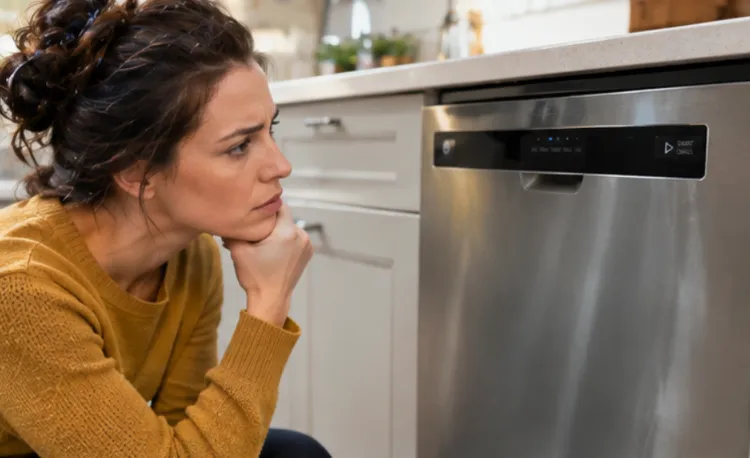
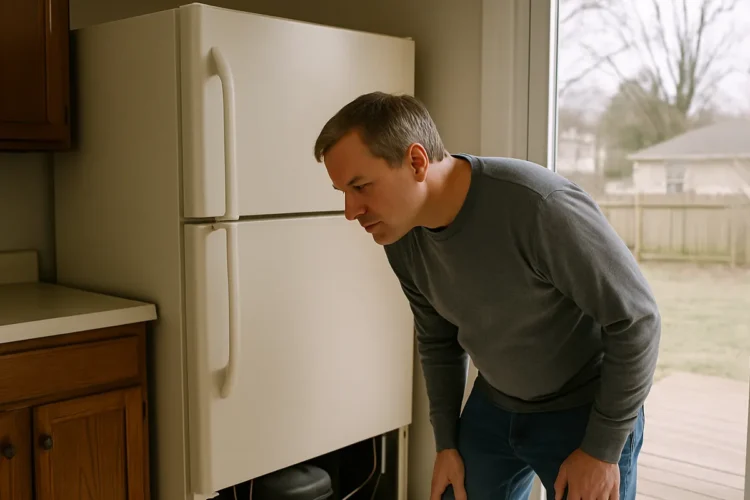
Buying a home in Arlington comes with plenty of decisions, from choosing paint colors to figuring out which furniture fits your new rooms. Then there are the appliances left behind by the previous owner. The refrigerator looks dated, the dishwasher has a few worn buttons, and neither came with a clear maintenance history. Should you keep them or start shopping for replacements?
You do not necessarily need to replace every older appliance after moving in. A refrigerator that looks outdated may still cool reliably, while a relatively modern dishwasher could have a hidden leak or failing component. The important thing is to understand the appliance's age, condition, repair history, and operating performance before spending money.
A practical inspection can help you decide what is worth keeping and what deserves attention from a professional. Here is how to evaluate the refrigerator and dishwasher in your new Arlington home.
How Can You Find Out How Old Your New Home's Appliances Are?
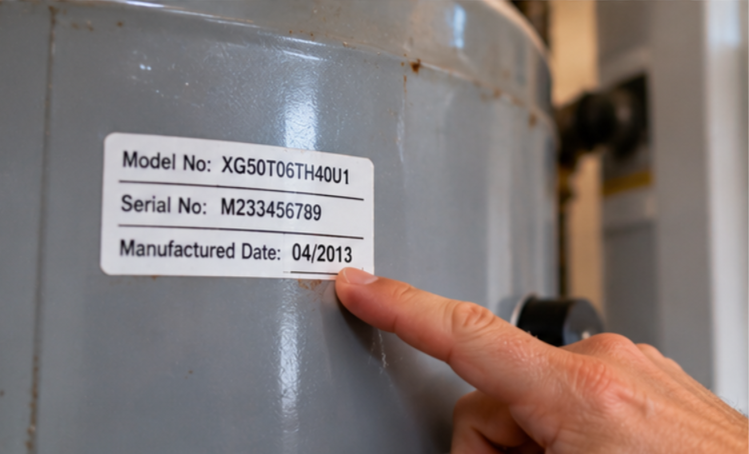
Start by identifying the model and serial numbers on each appliance. The model number tells you which appliance you have, while the serial number often contains manufacturing-date information. The exact date-code format varies by manufacturer, so do not assume that the first few digits always represent the year.
On most refrigerators, the identification label is inside the fresh-food compartment, along a side wall, near a crisper drawer, or around the door frame. Dishwasher labels are commonly located along the inside edge of the door or around the tub opening. You may need to open the door fully to find the information.
Record these details for each appliance:
- Manufacturer and brand
- Model number
- Serial number
- Approximate manufacturing date
- Any available warranty or service information
You can use the serial number with the manufacturer's support website or contact its customer service team to verify the production date. For example, GE Appliances explains how its serial-number format identifies the month and year, but other manufacturers use different systems.
Once you know the age, compare it with the appliance's actual condition. A refrigerator that is 12 years old but maintains safe temperatures may be a better candidate for keeping than a newer refrigerator with recurring cooling problems.
What Should You Check Before Keeping an Older Refrigerator?
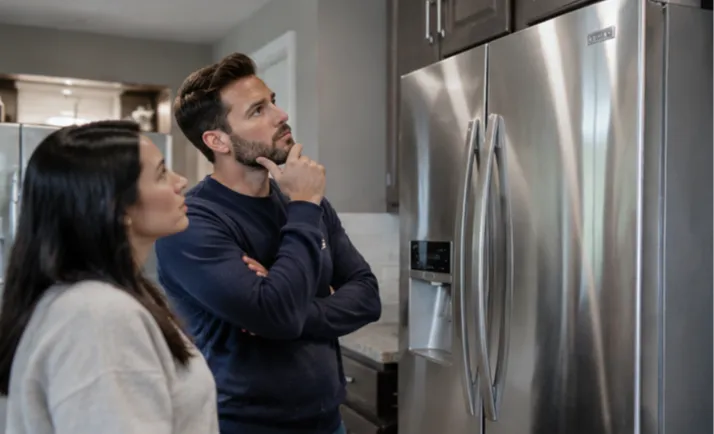
The refrigerator deserves particular attention because it runs continuously and protects the food stored inside. Before filling it with groceries, check whether it cools consistently, whether the doors seal properly, and whether there are signs of leaks or unusual noises.
Start with the temperature. Place an appliance thermometer inside the refrigerator and allow it to stabilize. The USDA recommends keeping the refrigerator at 40°F or below and the freezer at 0°F or below. Do not rely only on the temperature setting displayed on the control panel because it may not show the actual compartment temperature.
Check these five areas before deciding to keep it:
| What to inspect | What to look for |
|---|---|
| Cooling performance | Food stays cold and the freezer keeps items frozen |
| Door gaskets | Cracks, gaps, loose sections, or poor sealing |
| Interior and exterior | Water stains, rust, cracks, or visible damage |
| Fan and compressor operation | Unusual grinding, clicking, or persistent loud noises |
| Ice maker and water dispenser | Leaks, inconsistent ice production, or weak dispensing |
Pay attention to how the refrigerator behaves over several days. Persistent temperature fluctuations, excessive frost, water collecting underneath, or a compressor that runs almost continuously deserve investigation.
An older refrigerator may also use more electricity than a newer model. ENERGY STAR notes that refrigerators over 15 years old can cost around $95 more per year to operate, while an old refrigerator uses about 20% more energy on average than an ENERGY STAR model. Actual savings depend on the appliance and replacement model.
If the refrigerator has cooling problems, leaks, or unusual operating sounds, consider an inspection before replacing it. Professional refrigerator repair in the DMV can help identify whether the issue involves a door seal, fan, defrost component, thermostat, or another part of the cooling system.
How Do You Know If the Previous Owner's Dishwasher Is Still Worth Keeping?
A dishwasher can look perfectly fine from the outside while hiding problems around its door seal, drain system, pump, or internal components. Before running your first full load, inspect the interior and surrounding cabinet area for signs of water damage.
Open the door and look at the racks, spray arms, filter, detergent dispenser, and rubber gasket. Check underneath the sink for visible hose damage or loose connections, and look around the dishwasher's base for signs of previous leaks. Do not remove electrical panels or attempt to inspect internal wiring yourself.
Run a short test cycle and watch for these warning signs:
- Water collecting underneath the dishwasher or around the door.
- Standing water remaining in the bottom after the cycle.
- Dishes coming out dirty despite a properly loaded rack.
- Unusual grinding, buzzing, or rattling sounds.
- A door that does not close or latch securely.
- Rusted racks, damaged baskets, or deteriorating seals.
A clogged filter or improperly loaded rack may cause poor cleaning without indicating a major mechanical failure. However, repeated drainage problems, leaking, or a cycle that stops unexpectedly can point to a faulty component.
Also check the model and serial number to determine the dishwasher's age. If it has been sitting unused for months, inspect the water supply and drain connections before running it. A professional dishwasher repair service can diagnose problems involving door latches, pumps, drainage, and other components when basic checks do not resolve the issue.
When Is It Better to Repair an Old Appliance Instead of Replacing It?
Age matters, but it should not be the only factor in your decision. A 10-year-old refrigerator with a relatively minor fan problem may still have useful service life remaining. On the other hand, a much newer appliance with repeated failures and expensive parts may not be worth repairing.
The best approach is to compare the repair estimate with the cost of replacement while considering the appliance's overall condition, energy consumption, and likelihood of future problems.
| Situation | What may make sense |
|---|---|
| Minor problem with otherwise reliable operation | Repair |
| One replaceable component has failed | Compare repair cost with replacement value |
| Repeated breakdowns within a short period | Consider replacement |
| Major cooling-system failure in an aging refrigerator | Compare the full repair estimate with a new unit |
| Significant rust, cabinet damage, or recurring leaks | Replacement may be more practical |
| Appliance works well but looks outdated | Keep it if performance and safety are acceptable |
For example, replacing a refrigerator door gasket may be a reasonable repair if the appliance otherwise cools properly. A major sealed-system repair on an aging refrigerator requires a closer financial evaluation because the repair can be expensive and other components may also be nearing the end of their service life.
There is no universal rule that an appliance should be replaced after a particular number of years. The repair decision should account for the actual fault, parts availability, labor, energy use, and the condition of the remaining components.
What Should an Appliance Repair Technician Inspect After You Buy a Home?
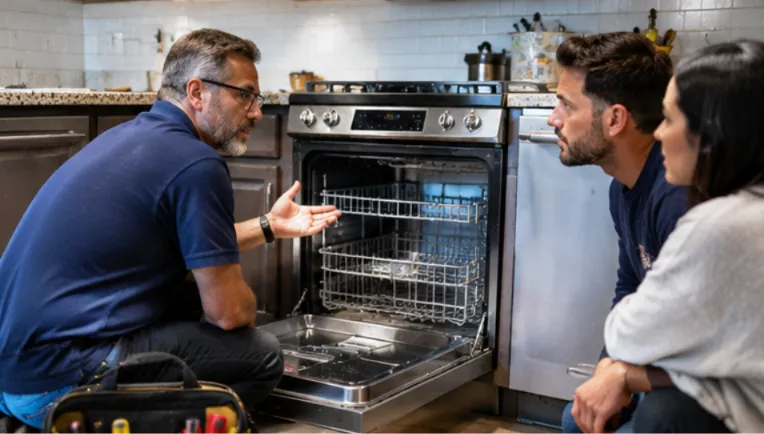
If the previous owner did not leave maintenance records, a professional inspection can provide a useful starting point. Rather than waiting for an appliance to stop working, you can have potential problems evaluated before they turn into larger repairs.
For a refrigerator, a technician can examine cooling performance, fans, defrost operation, door seals, electrical components, and other relevant parts. If the refrigerator is not maintaining temperature, the technician can investigate the cause instead of assuming the compressor needs replacement.
A dishwasher inspection may include the drain pump, circulation system, water inlet, door latch, seals, and control operation. The technician can also investigate unusual noises, incomplete cycles, drainage problems, and visible signs of water leakage.
Before scheduling an inspection, prepare a few details:
- Appliance brand, model, and serial number.
- Approximate age, if known.
- Any problems noticed during normal operation.
- Photos of visible leaks, damage, or error codes.
- Previous repair receipts or maintenance records, if available.
This information helps the technician understand what you have noticed and prepare for the service visit. It also gives you an opportunity to ask whether a recommended repair addresses the underlying problem or only a symptom.
How Much Should You Spend on Older Appliances in a New Home?
There is no single repair budget that works for every household. A refrigerator and dishwasher have different components, repair costs, and replacement considerations. The amount you should spend depends on the specific fault and how much useful service you can reasonably expect after the repair.
Start by requesting a diagnosis and a clear estimate before approving major work. Ask which component has failed, whether the part is available, what the repair includes, and whether any additional issues were identified during inspection.
For a better comparison, consider these factors:
- Repair estimate: Include diagnostic charges, parts, labor, and any additional fees.
- Replacement cost: Compare the repair with the price of a suitable new appliance, including delivery and installation.
- Energy consumption: Check the EnergyGuide label when comparing older refrigerators with newer models.
- Parts availability: Some older or discontinued models may be more difficult or expensive to repair.
- Future reliability: Consider whether the appliance has a history of repeated problems.
- Household needs: A refrigerator with insufficient capacity or a dishwasher that cannot handle your daily use may not be worth keeping, even if it works.
A useful starting point is the 50% rule: if a repair estimate approaches half the price of a comparable replacement, consider whether replacing the appliance offers better long-term value. This is a budgeting guideline, not a technical standard. A lower-cost repair may still be a poor investment if the appliance has several other problems.
Why Choose District Appliance Services for Appliance Repair in Arlington, VA?
You do not have to replace every appliance simply because it came with the house. A professional diagnosis can help identify which components need attention and whether repairing your existing appliance is a practical investment. Our goal is to help you make an informed decision before spending money on replacement equipment.
With more than 20 years of appliance repair experience, we help homeowners across Arlington and the DMV region keep their household appliances working reliably. Our appliance repair services cover a range of common household problems, including refrigerator cooling issues and faulty oven or range components. We also provide dedicated refrigerator repair and oven and range repair services.
Whether your refrigerator is struggling to maintain its temperature or another appliance is showing signs of wear, our technicians can inspect the problem and explain the available repair options. Call (202) 930-9554 to schedule appliance repair and get your new Arlington home appliances back in working order.
Frequently Asked Questions About Keeping Old Appliances After Buying a Home
1. How old is too old for a refrigerator?
There is no fixed replacement age. A refrigerator's condition, cooling performance, energy consumption, repair history, and parts availability matter more than age alone. A well-maintained older unit may still be worth keeping.
2. How can I find the manufacture date of an older refrigerator?
Locate the model and serial number label, usually inside the refrigerator compartment or around the door frame. Check the serial number with the manufacturer's date-code guide because formats differ between brands.
3. Should I have the refrigerator inspected before putting groceries inside?
If you do not know its operating condition, check the actual refrigerator and freezer temperatures first. The USDA recommends 40°F or below for the refrigerator and 0°F or below for the freezer. If it cannot maintain safe temperatures, arrange professional diagnosis before relying on it for food storage.
4. Is it worth repairing a 10-year-old dishwasher?
It can be. A dishwasher with a minor pump, latch, or drainage problem may be worth repairing if the rest of the appliance is in good condition. Compare the repair estimate with replacement costs before deciding.
5. Should I replace all the old appliances after buying a house?
Not necessarily. Evaluate each appliance separately based on age, performance, condition, energy use, and repair costs. Keeping reliable appliances can help you avoid unnecessary replacement expenses while settling into your new Arlington home.