
When an appliance stops working, you want the person coming into your home to know what they are doing. But terms such as “certified,” “trained,” and “authorized” are often used interchangeably even though they can mean different things. Before scheduling an appliance repair in Arlington or anywhere in the DMV, it helps to know what those terms mean and which credentials actually matter for your appliance.
You also don’t need a technician with every possible certification. A dishwasher repair, dryer heating problem, and refrigerator cooling issue can require very different technical knowledge. The better question is whether the technician has the right training and credentials for the specific appliance and repair you need.
Certification, Training, and Authorization Mean Different Things
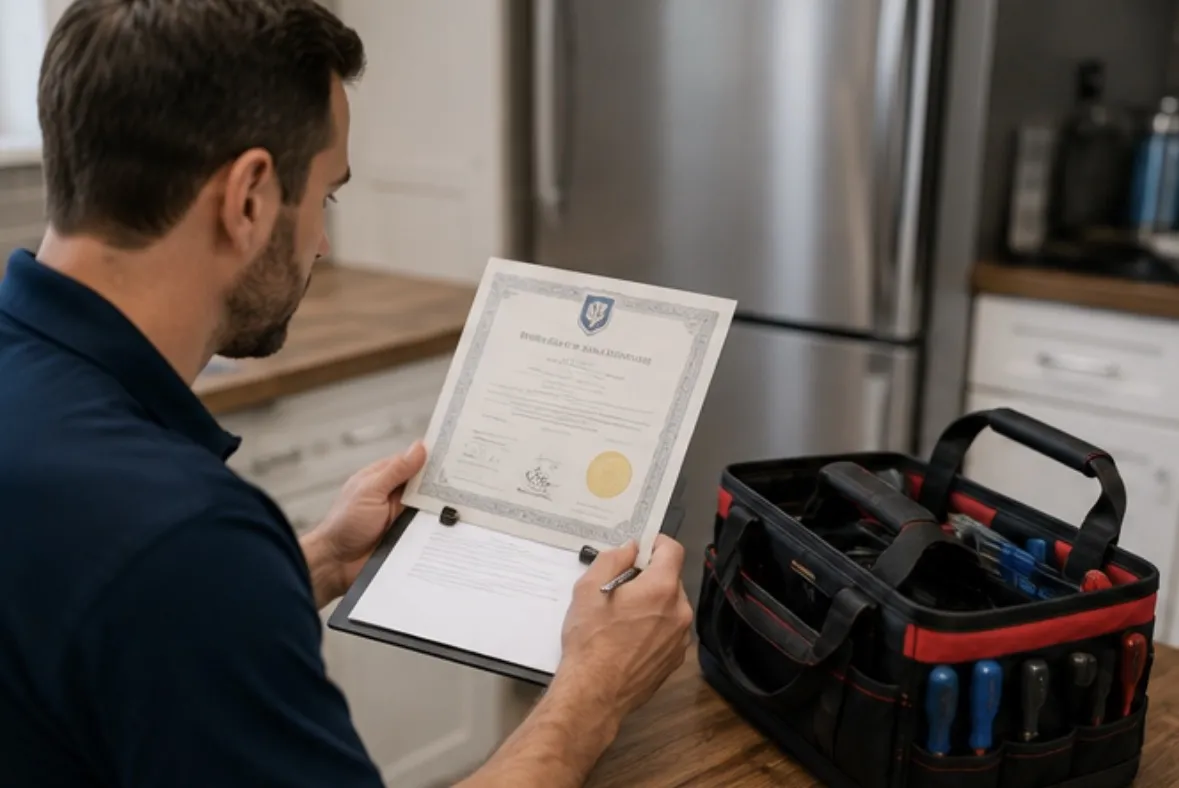
A technician can have years of hands-on experience without holding a formal certification. Another technician may have manufacturer-specific training but not be authorized by every brand. Understanding the difference helps you ask more useful questions before allowing someone to diagnose or repair an expensive appliance.
| Term | What It Means | What You Can Ask |
|---|---|---|
| Certification | A recognized organization has verified specific technical knowledge | Which organization issued it? |
| Manufacturer training | Training focused on a particular brand or appliance system | Have you trained on this appliance brand? |
| Authorization | A manufacturer has approved a company or technician for certain service work | Are you authorized to service this model? |
| Experience | Practical experience repairing similar appliances | How often do you handle this type of repair? |
For a straightforward dishwasher problem, practical experience with that appliance category may be particularly important. For a refrigerator repair involving the sealed refrigerant system, however, specific refrigerant certification becomes much more important.
If you’re arranging appliance repair service, don’t hesitate to ask what qualification applies to the repair you’re requesting. A professional company should be able to explain its technicians’ relevant training without making the question feel complicated.
Start With the Appliance and the Problem
The right technician depends on what has actually gone wrong with your appliance. A washer that leaves water in the drum, a dryer that tumbles without producing heat, and a refrigerator that runs continuously but stays warm can require completely different diagnostic skills. Before booking a repair, note the appliance brand, model number, approximate age, symptoms, and any error code on the display.
The Type of Repair Matters
- Refrigerator: Cooling problems can involve fans, sensors, controls, compressors, defrost systems, or the sealed refrigerant circuit.
- Dishwasher: A failure to drain, clean, or heat may involve pumps, valves, heating elements, or electronic controls.
- Washer: Drainage, spinning, or filling problems can point to pumps, motors, belts, valves, suspension components, or controls.
- Dryer: A dryer that runs but produces no heat may require testing of the heating element, thermostat, thermal fuse, motor, or electrical connections.
- Oven or range: Temperature and ignition problems can involve heating elements, sensors, controls, or gas components.
Refrigerator cooling repairs deserve additional attention when the technician needs to open or service the sealed refrigerant circuit. The EPA requires technicians performing work that could release regulated refrigerants to hold the appropriate Section 608 certification, with the applicable certification depending on the equipment and work involved.
So instead of simply asking, “Are you certified?” ask, “What certification or training applies to this particular repair?” That question tells you much more about whether the technician’s qualifications match the appliance sitting in your home.
Ask Where the Certification Comes From
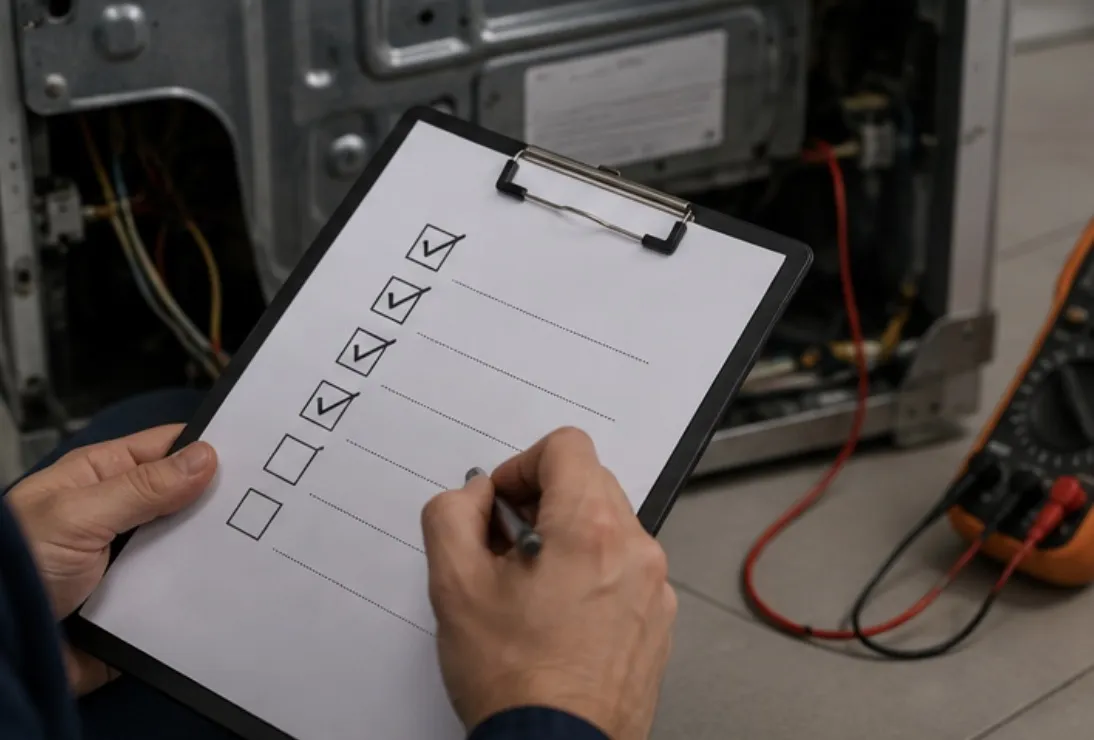
If a technician or appliance company tells you that its technicians are certified, ask what certification they hold and who issued it. A legitimate credential should be traceable to a recognized certification organization rather than simply being a company-created title.
For refrigerant-related appliance work, EPA Section 608 certification is particularly important. The EPA explains that technicians must pass an EPA-approved test to receive Section 608 certification, and the certification does not expire.
You can keep the conversation simple. You don’t need to know every technical certification available. Ask a few straightforward questions:
- What certification does the technician hold?
- Who issued the certification?
- Does it apply to my type of appliance?
- Does this repair involve refrigerant or another specialized system?
- Has the technician received manufacturer-specific training?
- Will the technician be performing the repair or only diagnosing it?
For a routine appliance repair, these questions may take less than a minute to answer. For a refrigerator, gas appliance, or expensive built-in appliance, they can give you much more confidence before the work begins.
Manufacturer Training Can Be Valuable for Modern Appliances
Certification demonstrates general technical knowledge, while manufacturer training can provide familiarity with a particular brand’s appliances and service procedures. That distinction matters because today’s appliances can include electronic controls, sensors, diagnostic modes, specialized components, and brand-specific error codes.
Consider a relatively new appliance that is only 2 to 5 years old. If it displays an error code or develops an unusual operating problem, a technician familiar with that manufacturer may be able to use the appliance’s diagnostic information more effectively. That can help narrow down the actual cause instead of replacing parts based only on the symptoms.
Before your appointment, have this information available:
- Appliance manufacturer and model
- Approximate installation or purchase year
- Specific problem you’re experiencing
- Error code, if one appears
- Whether the appliance is still under warranty
- Any previous repair attempts
Providing the model number is particularly helpful because two appliances from the same brand can use different components and diagnostic procedures. Giving the repair company those details in advance helps determine whether the technician arriving at your Arlington-area home is equipped for the job.
Certifications You Can Check With Your Appliance Technician
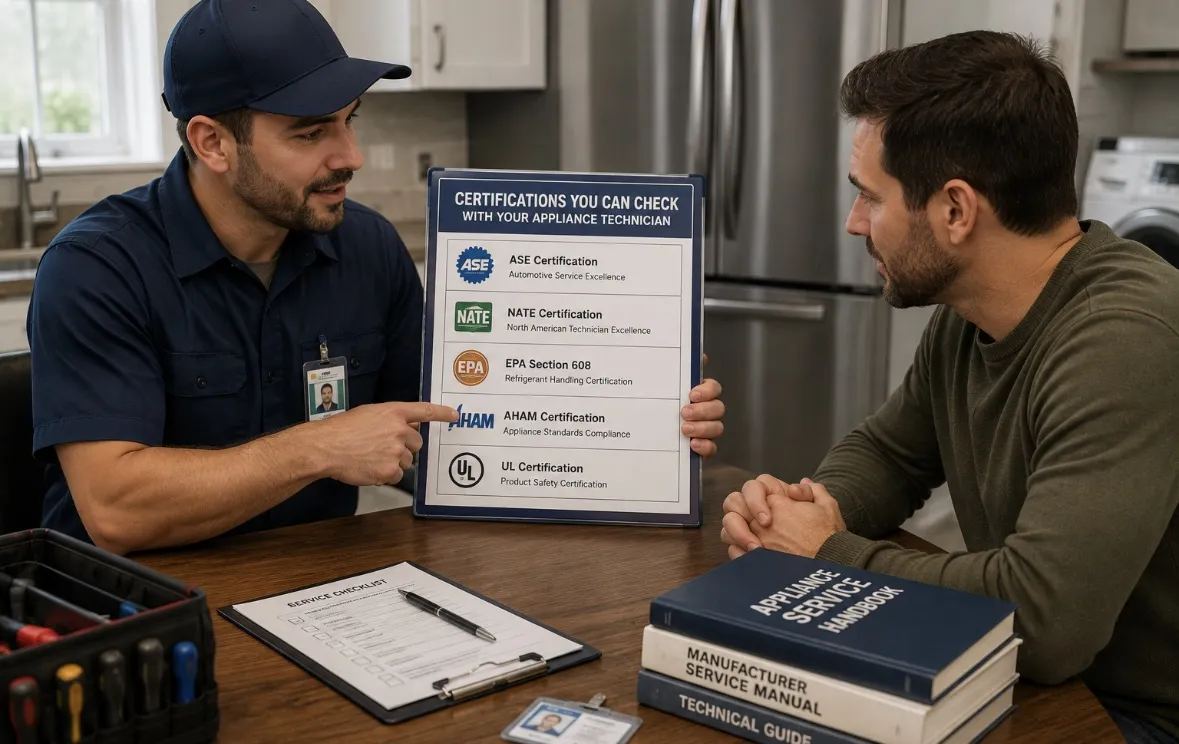
You don’t need to ask an appliance technician for a long list of credentials. Instead, ask for the certification that relates to the work being performed. This is especially important when a repair involves refrigerant, because EPA Section 608 requires technicians who service equipment that could release regulated refrigerants to be certified through an EPA-approved testing program. The EPA recognizes different certification types, including Type I for small appliances and Universal certification for technicians working across all covered equipment categories.
For a homeowner in Arlington or the DMV, these are some of the credentials and training you can ask about:
- EPA Section 608: Particularly important when a refrigerator or other appliance requires work involving its refrigerant circuit. Ask which Section 608 certification the technician holds.
- Manufacturer training: Ask whether the technician has received training for the brand and type of appliance being repaired.
- Appliance-specific certification: Ask whether the technician holds a recognized appliance-service credential relevant to the equipment being diagnosed.
- Brand authorization: If the appliance is under a manufacturer’s warranty, ask whether the company is authorized to perform warranty service for that brand.
- Ongoing technical training: Ask whether technicians receive continuing training as appliance controls, refrigerants, diagnostic systems, and components change.
A certification should support the technician’s ability to perform the particular repair, not simply serve as a marketing label. If you’re arranging appliance repair service for a refrigerator, dryer, dishwasher, or another major appliance, asking these questions before the appointment can help you understand who will be working on your equipment.
Ask About Manufacturer Authorization When Your Appliance Is Under Warranty
Certification and manufacturer authorization are two different things. A technician can have strong general appliance-repair credentials without being an authorized service provider for every manufacturer. If your appliance is still covered by a manufacturer’s warranty, confirm who is permitted to perform the repair and whether using an independent technician could affect the warranty.
Have your appliance’s model and serial number available when you call. The manufacturer, model, age, and problem can help the repair company determine whether special parts, diagnostic procedures, or warranty requirements apply.
Before approving the appointment, ask:
- Is this appliance still within its manufacturer’s warranty period?
- Is your company authorized to perform warranty repairs for this brand?
- Will the repair use manufacturer-approved or appropriate replacement parts?
- Who handles the warranty paperwork?
- Will the repair documentation be provided after service?
This is particularly useful for newer appliances, where an electronic control board or specialized component can be expensive. Understanding the warranty process before the technician starts can prevent confusion about who pays for parts and labor.
A Qualified Technician Should Be Able to Explain the Repair
Certification gives you one way to evaluate a technician, but the service experience should also make technical information understandable. You should be able to ask what failed, how the technician confirmed the problem, what part is needed, and whether the proposed repair makes sense for the age and condition of the appliance.
That matters when you’re deciding whether to repair or replace an appliance. A 3-year-old refrigerator with a failed fan motor presents a very different decision from a 15-year-old refrigerator requiring a major sealed-system repair. The technician should give you enough information to make that decision without turning the appointment into a sales pitch.
For homeowners who need professional appliance repair in Arlington, the combination of relevant credentials, appliance-specific experience, accurate diagnosis, and clear communication is more useful than simply choosing a technician because an advertisement says “certified.”
Why Choose District Appliance Services in Arlington, VA?
When you need an appliance technician in Arlington, you want the person diagnosing the appliance to have the right experience for the job, not simply a generic claim of expertise. District Appliance Services serves Arlington and the DMV with appliance repair for refrigerators, dishwashers, washers, dryers, ovens, ranges, freezers, microwaves, and other major household appliances.
Our approach is straightforward: diagnose the problem, explain what we find, complete the appropriate repair, and test the appliance afterward. We also work with major brands including Samsung, Bosch, Whirlpool, and LG, giving homeowners a local option when a brand-specific appliance needs attention.
If you’re looking for appliance repair service in Arlington, VA, ask us about the technician’s relevant training, the repair process, the parts being recommended, and any applicable warranty requirements. The goal is to give you enough information to understand the repair before you approve the work.